Career Guidance

School Guidance and Counselling

The school’s Guidance Counsellor plays an important role in the personal, vocational and academic development of all students. Ms. Dunne is actively involved in the transition to third level and is available to meet parents should the need arise. Every effort will be made to guide pupils in their choice of subjects and, eventually, a career and suitable vacancies will be brought to their notice if they arise. Trial interviews, visits to third-level institutions, career seminars, etc, are organised for students each year.

What is Guidance?

Guidance in schools refers to a range of learning experiences provided in a developmental sequence that assists students to develop self-management skills, which will lead to effective choices and decisions about their lives. It encompasses the three separate, but interlinked, areas of personal and social development, educational guidance and career guidance.

Counselling is a key part of the school guidance programme, offered on an individual or group basis as part of a developmental learning process and at moments of personal crisis. Counselling has as its objective the empowerment of students so that they can make decisions, solve problems, address behavioural issues, develop coping strategies and resolve difficulties they may be experiencing. Counselling in schools may include personal counselling, educational counselling, career counselling or combinations of these.

Guidance Provision

Introduction

The Guidance curriculum may be divided into two components:

  • Formal
  • Informal

Formal Guidance

The Formal Guidance curriculum is delivered using two forms of intervention employing a number of methodologies:

  1. Individual contact of a personal counselling nature and careers/vocational
    guidance
  2. Classroom guidance delivered in regular weekly classes to the senior cycle
    students

Informal Guidance

The Informal Guidance programme consists of liaising with other Teaching Staff/Management to promote cross-curricular links and to enhance the development of a whole school policy in relation to the delivery of The Guidance Plan. Meetings with Parents/Guardians form an integral part of informal guidance.

Guidance Programme

1st Year to 6th Year

First Year
  • Entrance assessment CAT3
  • Individual interview with each student around ‘How they are settling in’
  • Counselling to certain students and Referrals
  • SPHE (not necessarily by guidance counsellor)
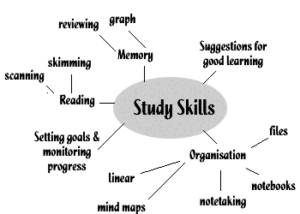
  • Study Skills (through SPHE or guest speakers)
  • Time management

  • Individual counselling to certain students and Referrals
    SPHE
  • Study Skills (through SPHE or guest speakers)
  • Career guidance if requested

  • Individual counselling to certain students and Referrals
  • Study Skills (through SPHE or guest speakers)
  • Reasonable accommodation applications for state exams
  • SPHE
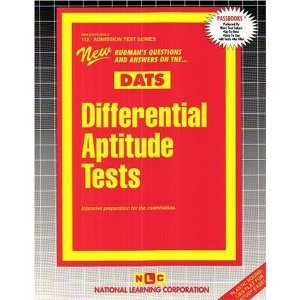
  • DATS testing
  • Interest assessment
  • Meetings with students regarding DATS and CII results
  • Meetings with students regarding senior cycle options
  • Talk with students and parents regarding senior cycle options

  • Subject choice
  • Preparation for work experience
  • Preparation for the world of work
  • Individual counselling and referrals if needed

  • One timetabled class per week
  • Preparation for the world of work
  • Research and ICT skills so that students can be self-directed in their career exploration and development
  • Introduction to the National Framework of Qualifications
  • Career Investigation
  • Career talks
  • Study Skills
  • Exam technique
  • Work Experience (Link Modules)
  • Reasonable accommodation applications
  • Individual counselling to certain students and Referrals

  • One timetabled class per week
  • Careers expo (RDS Higher Options Conference)
  • Career options
  • Qualifax, Career Directions and Careers portal websites
  • CAO and or UCAS Applications on line.
  • PLC Application forms
  • Exam technique
  • Study Skills
  • College funding – Grants
  • Individual Career interview (at least one)
  • Open Day visits (students provided with information on dates so they can attend in their own time
  • HEAR and DARE information and applications
  • Reasonable accommodation applications
  • Individual counselling to certain students and Referrals
Scroll to Top
Privacy Overview

We use cookies for a variety of reasons, detailed below. Unfortunately, in most cases, there are no industry-standard options for disabling cookies without completely disabling the functionality and features they add to this site. It is recommended that you leave all cookies on if you are not sure whether you need them or not, in case they are used to provide a service that you use.

To know more about the privacy policies, please refer to the Data Protection Policy of St. Fergal’s College

Strictly Necessary Cookies

Strictly Necessary Cookies should be enabled at all times so that we can save your preferences for cookie settings.

3rd Party Cookies

In some special cases, we also use cookies provided by trusted third parties—the following section details which third-party cookies you might encounter through this site.

This site uses Google Analytics which is one of the most widespread and trusted analytics solutions on the web to help us understand how you use the site and ways that we can improve your experience. These cookies may track things such as how long you spend on the site and the pages that you visit so we can continue to produce engaging content. For more information on Google Analytics cookies, see the official Google Analytics page.